

Stepping into the role of an industrial plant director is the ultimate milestone in a manufacturing career, transitioning operations from localized, small-scale workshops into high-throughput, automated industrial environments. Managing a plant at this scale introduces a completely new set of financial, structural, and logistical challenges. You are no longer just responsible for tracking daily team labor metrics, managing basic tool inventories, or auditing localized assembly lines. Instead, a large-scale plant forces you to sit at the absolute center of a complex, multi-layered grid where mechanical engineering loops continuously collide with macro-supply chain logistics, commercial real estate zoning, real-world fleet liability structures, and heavy facility infrastructure.
Navigating Commercial Real Estate and Securing High-Capacity Logistics Sites
Establishing a high-throughput manufacturing facility requires an exhaustive evaluation of potential properties long before signing a commercial lease or purchasing acreage. First-time plant directors frequently commit the high-stakes error of selecting a property based solely on the upfront real estate cost or square footage dimensions. In heavy industry, a site’s true operational utility is governed by its underlying infrastructure parameters—such as the maximum load capacity of the concrete foundation, the available ceiling clearance heights to accommodate high-tier racking, and the presence of high-voltage, three-phase electrical power loops capable of driving multi-ton automated machinery without blowing municipal transformers.
To find parcels that legally permit continuous, twenty-four-hour manufacturing operations, your real estate acquisition strategy must rely on specialized databases that track high-capacity commercial spaces. Scanning professional industrial property listings allows your executive team to filter sites by their technical attributes, tracking critical data points like proximity to major rail networks, distance to deep-water shipping ports, and local EPA emissions zoning caps. Reviewing these detailed industrial property listings ensures you identify a location that satisfies your physical utility needs while insulating your enterprise from future zoning disputes or municipal code violations that could cripple production.
- Verify that the concrete sub-slab thickness across prospective parcels is at least six to eight inches to support heavy machinery footprints safely.
- Audit local municipal tax structures and regional utility rate cards across different industrial zones to optimize your long-term fixed operational overhead.
- Ensure the site features dedicated, high-clearance truck ingress and egress lanes to prevent heavy logistics vehicles from backing out into public traffic.
Once an uncompromised parcel is secured, you must transition your focus to the interior structural architecture of your storage and logistics zones. Forcing a high-velocity production line to feed into a disorganized, poorly planned storage floor will instantly introduce severe operational bottlenecks. To maximize materials flow efficiency, you must design your main warehouse utilizing exact, mathematical aisle-width calculations to match the precise turning radii of your automated material handling equipment. Structuring a modern, high-volume warehouse floor plan with clear visual lane-demarcation lines and isolated, high-density storage zones guarantees that inbound raw materials and completed products move through the facility without creating logistical gridlocks or exposing floor workers to pedestrian safety hazards.
Staging High-Tolerance Production Lines and Heavy Automated Tooling
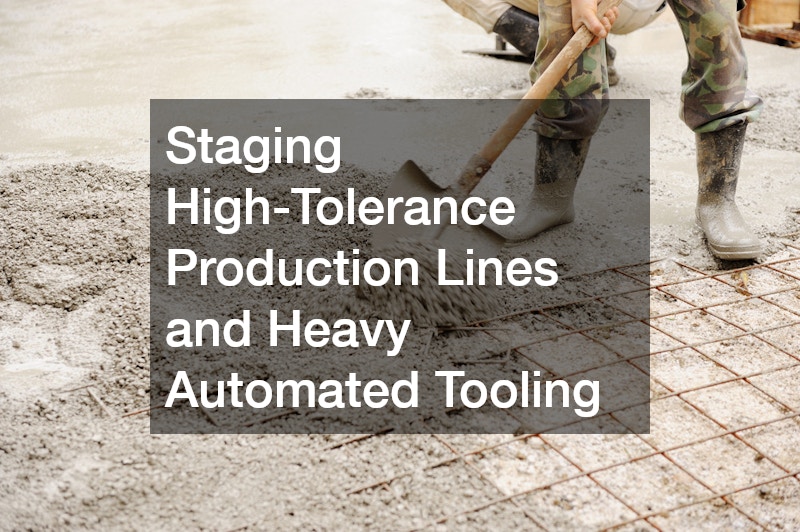
The core processing sector of your industrial plant acts as the primary engine of your enterprise, which means its layout must be engineered with absolute geometric precision. Modern high-tolerance manufacturing requires moving away from manual workstations and deploying heavy, computer-guided fabrication machinery that operates continuously under extreme mechanical loads. Because these heavy automated systems generate massive rotational forces and high-frequency vibrations, they cannot simply be bolted onto standard factory concrete. You must pour thick, vibration-dampening reinforced concrete isolation pads to protect delicate, calibrated components from surrounding facility tremors.
To achieve sub-millimeter component tolerances during high-volume production runs, you must integrate a multi-axis CNC machine center directly into the center of your primary manufacturing floor. Operating a state-of-the-art CNC machine center allows your programming team to upload complex digital CAD design models and execute high-speed milling, boring, and subtractive carving routines across exotic alloys and heavy polymers with laboratory accuracy. Maintaining this level of precision demands the implementation of strict, predictive diagnostic monitoring schedules to verify spindle alignment, track cutting tool wear profiles, and monitor internal fluid temperatures within the machining loop before a micro-deviation translates into a costly batch defect.
- Isolate your high-precision milling networks from heavy loading dock traffic to shield automated tooling sensors from external mechanical shocks.
- Utilize centralized, high-efficiency coolant filtration networks to continuously clear heat and particulate debris away from active cutting heads.
- Maintain a strict digital ledger tracking all computer-numerical-control programming modifications to enforce absolute revision control.
While a highly calibrated CNC machine center forms the backbone of your subtractive manufacturing line, keeping your assembly layers operating at peak capacity requires an unyielding, highly reliable material supply chain. If your plant specializes in ground logistics assembly or high-velocity transportation fabrication, maintaining automated inventory reserves of high-demand auto parts is an absolute prerequisite for operational continuity. Staging dedicated inventory racks packed with precision-engineered auto parts, such as heavy-duty suspension links, high-output alternators, custom fuel rails, and performance braking assemblies, ensures your assembly lines never face unexpected downtime. Furthermore, establishing a deep, domestic buffer of these critical auto parts insulates your production quotas against volatile international shipping delays and geopolitical supply chain shocks, keeping your plant’s output perfectly uniform month after month.
Structuring Fleet Distribution Frameworks and Asset Indemnification
Operating a premier industrial plant involves more than just mastering internal fabrication lines and warehouse storage dynamics; it requires taking absolute operational command over the downstream distribution network that delivers your finished products across regional and state borders. Launching an in-house logistics fleet composed of multi-ton commercial vehicles introduces a massive, complex corporate liability profile that can easily bankrupt an unprotected business if a road disaster occurs. Managing this risk demands that you move past generic commercial auto coverage and build an ironclad asset protection framework.
To shield your corporate capital from devastating highway accidents, cargo damage claims, and environmental clean-up liabilities, you must work alongside specialized industrial brokers to lock in comprehensive semi truck insurance policies. Securing high-limit semi truck insurance ensures that your transport tractors, logistics trailers, and commercial drivers are fully covered against catastrophic field scenarios while moving massive payloads down high-speed transit corridors. These structured semi truck insurance policies act as an essential financial shield, providing immediate cargo replacement credits and comprehensive legal defense funding to keep your broader distribution network fully operational during severe roadside crises.
- Require all commercial fleet drivers to complete advanced defensive operation training modules before assigning them to active shipping lanes.
- Install high-definition dual-facing telemetry cameras in all distribution cabs to capture clear, real-time data metrics during transit disputes.
- Enforce strict, automated electronic logging device (ELD) tracking to guarantee that all logistics operators satisfy federal hours-of-service mandates.
While robust insurance policies insulate your financial capital from roadside accidents, maintaining the physical and mechanical integrity of your long-haul transport fleet requires an identical level of geometric, data-driven vigilance. Heavy-duty logistics rigs face intense mechanical punishment, operating under heavy payloads for thousands of miles through extreme weather variations. To prevent road breakdowns from disrupting your distribution commitments, you must partner with certified fleet technicians to execute high-fidelity diesel engine services across your entire transport network. Scheduling regular, comprehensive diesel engine services, encompassing predictive turbocharger diagnostics, precise fuel injector calibrations, high-pressure common-rail inspections, and modern emissions system overhauls, minimizes fleet downtime, optimizes over-the-road fuel economy, and guarantees your rigs satisfy strict state and federal environmental transport mandates.
Overhauling Facility Entryways and Securing High-Traffic Loading Docks
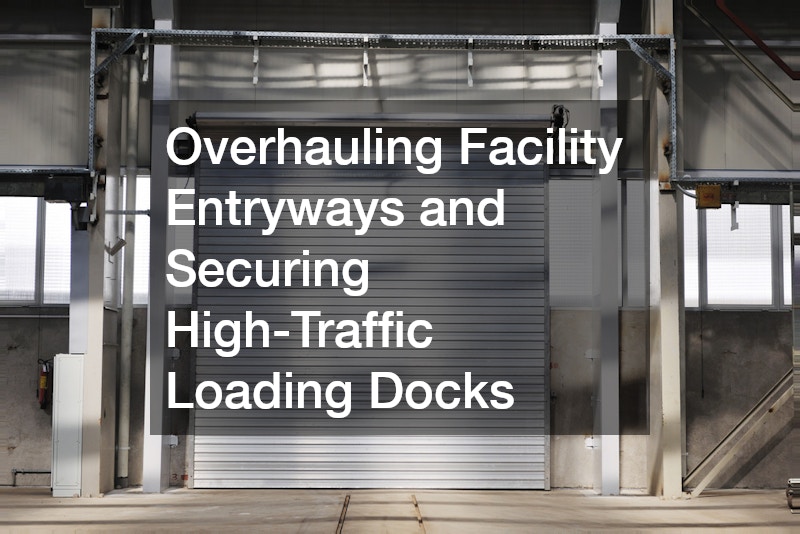
The primary boundaries where your internal warehouse storage floor meets your external long-haul logistics distribution fleet are your facility’s heavy loading bays. These high-traffic access points face continuous operational stress as forklifts, heavy pallets, and logistics crews cycle through them every hour. Because loading docks are massive, uninsulated openings exposed to unpredictable outdoor elements, failure to properly secure and manage these ingress points can lead to severe warehouse climate loss, soaring energy bills, and compromised facility security.
To create an uncompromised barrier that seals tightly against environmental elements and prevents unauthorized facility entry, you must invest in an industrial, heavy-duty garage door system for every active loading bay. Equipping each bay with an insulated, high-speed motorized garage door ensures that the physical boundary opens and closes in a matter of seconds, preventing cold winter drafts or intense summer heat from disrupting your warehouse climate controls. These rugged garage door systems must feature heavy-gauge steel tracking, reinforced internal weather-stripping, and advanced edge-safety sensors to prevent accidental crushing damage to incoming material handling machinery during high-speed staging maneuvers.
- Install high-durability rubber dock seals around each garage door framework to form an airtight gasket when a freight trailer backs up to the bay.
- Implement automatic interlock switches that prevent a loading bay door from raising until a transport trailer is safely locked into the wheel chocks.
- Incorporate heavy-duty steel safety bollards on both sides of the internal door tracks to shield your garage door mechanisms from accidental forklift collisions.
While hardening your loading dock bays with commercial steel doors secures your immediate industrial operations, managing the broader physical boundary between your facility’s exterior acreage and the surrounding municipal environment is equally critical to maintain strict community compliance. Industrial sites frequently generate substantial acoustic noise, dust, and visual clutter that can strain relationships with neighboring commercial zones or local city planning boards. To soften your plant’s industrial footprint, partner with commercial land curators to integrate premium garden design services into your perimeter master plan. Utilizing specialized garden design services to deploy dense visual layers of native evergreen trees, structural earthen berms, and eco-friendly bio-retention swales creates a highly effective natural noise and dust buffer. This advanced layout planning satisfies local landscaping mandates, improves your brand’s regional environmental profile, and manages parking lot stormwater runoff safely and sustainably.
Synchronizing External Brand Presentation and Structural Sign Staging

The final phase of bringing a major industrial plant online involves establishing your physical presence within the regional corporate community. Your facility’s exterior assets do more than just display a corporate logo; they serve as critical navigational landmarks that guide high-volume shipping logistics carriers, bulk material suppliers, and prospective labor talent safely across your industrial footprint. If your plant lacks prominent, clear, and highly professional wayfinding assets, inbound truck drivers will struggle to locate incoming logistics paths, causing traffic delays and operational bottlenecks at your main gates.
To project an elite standard of professional excellence and secure a commanding local presence, you must source a high-visibility, weather-resistant business sign to stand at the main property entry. Designing a custom business sign that incorporates crisp, reflective lettering panels and energy-efficient LED internal illumination ensures your facility can be spotted effortlessly from down the highway, even during dense nighttime or winter driving conditions. A modern, strategically positioned business sign acts as a continuous visual anchor for your brand, signaling to incoming investors, visiting enterprise vendors, and regional shipping partners that your facility operates to a world-class industrial standard.
- Incorporate high-contrast color palettes and clear, standardized typefaces into your sign layout to optimize drive-by readability at highway speeds.
- Link your main entrance visual panels to automated dusk-to-dawn ambient light sensors to guarantee consistent lighting without manual intervention.
- Coordinate your exterior corporate identity colors to match the precise branding guidelines used across your digital platforms and vehicle fleets.
Because an industrial monument sign is a massive, multi-hundred-pound structural asset that faces continuous exposure to extreme environmental wind shear, low-temperature freeze cycles, and heavy weather stresses, its physical erection cannot be treated as a casual carpentry task. To protect your corporate capital and prevent a catastrophic structural collapse, you must retain an authorized engineering team to execute a comprehensive sign installation loop. A professional sign installation involves engineering deep-set, reinforced concrete subterranean footings, anchoring structural steel supporting pillars, and utilizing crane machinery to lift and lock the display panels into place. Managing your sign installation process through licensed, code-compliant technicians ensures that your visual assets satisfy all local municipal height limitations, wind-load shear requirements, and strict right-of-way setback regulations, locking in an unyielding, safe structural landmark that stands the test of time.
True long-term industrial prosperity is achieved only when you step completely into the authoritative role of a proactive asset director who actively commands every internal, external, and subterranean variable of their facility ecosystem. By systematically executing your multi-layered plant blueprint, from routing site selection through premium industrial property listings to orchestrating high-precision CNC machine center loops, comprehensive semi truck insurance frameworks, industrial garage door updates, and engineered sign installation projects, you completely insulate your manufacturing investment from failure. Build a tight-knit, highly reliable network of certified structural engineers, elite performance fabricators, experienced fleet logistics partners, and authorized legal advisors who respect the unique technical realities of your terrain. Command your plant with absolute mechanical confidence, honor the high-speed data streams of your assembly floor, and advance your manufacturing journey with the absolute assurance that your facility will stand as a secure, thriving fortress of efficiency, safety, and corporate equity for decades to come.